
How Pricing Works
Two shops, one street, one product, two prices
Identical goods sold within walking distance of each other routinely carry different prices, and the reasons are structural rather than accidental.
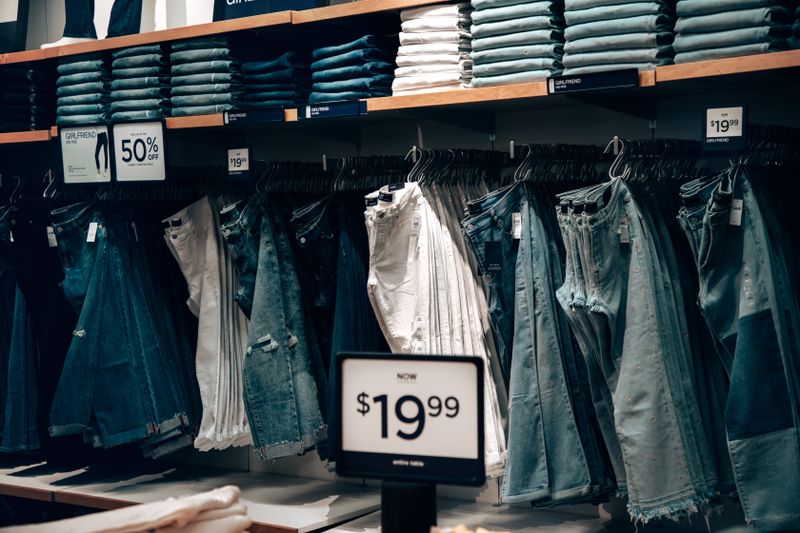
Most explanations of price dispersion stop at the point where it starts to matter. This one carries on.
The short version
- Dispersion persists even where comparison is easy.
- Search costs are what allow it to survive.
- Format and location explain much of the gap.
Dispersion does not disappear
Economic theory once predicted that easy comparison would drive identical goods to a single price, and decades of price data have not obliged. Studies of online markets have generally found wide and persistent spreads for identical items, including items where comparison takes seconds. The persistence is the interesting part, because it means something other than ignorance is holding the gap open.
Sellers know their rivals' prices better than any shopper does, and they still choose to sit apart from them. A price gap on identical goods is therefore evidence about the sellers, not proof that one of them is asleep.
Search cost is the mechanism
Checking another seller costs time, attention and sometimes a journey, and that cost is what allows a higher price to survive next to a lower one. Where the effort is trivial and the saving is large, the gap closes; where the effort is real and the saving is small, it does not.
This is why dispersion is widest on low-value everyday items, which almost nobody compares, and narrowest on large considered purchases. It also explains why sellers work to make comparison marginally harder through pack sizes, bundles and exclusive model numbers. Every small obstacle to comparison is worth a little price room, and the obstacles are cheap to build.
Format, location and the cost behind them
A convenience site pays more per square metre, sells less per hour and holds a narrower range, all of which raise its cost per item sold. A large store spreads fixed costs across enormous turnover, which is why the same goods can sit lower without anyone losing money. Location within a town matters for the same reason, since footfall and rent move together and both feed the price.
Run the arithmetic and a shop positioned as convenient is selling proximity and opening hours alongside the goods, and those are the things you are paying for. Judging that as unfair misses the point; the question is whether you need what the format provides on that particular trip.
Deliberate obstacles to comparison
Exclusive model numbers created for one retailer make a like-for-like check impossible even when the products are near identical. Non-standard pack sizes do the same job in groceries, since a slightly different weight defeats a straight price comparison. Bundling a small accessory into a listing changes the item enough to break a matching engine while barely changing the value.
These are legal, common, and largely invisible unless you are specifically looking for them.
The counter is to compare on the unit, the specification or the part number rather than on the listing title.
What a big gap usually means
A price far below the cluster often reflects a clearance, an old stock batch, a grey import or a listing with costs moved into delivery. A price far above the cluster usually reflects convenience, service, immediacy or a captive location rather than a better product. Reading the cluster rather than the extremes gives you the working market price, which is the number worth comparing against.
Per unit, two or three quotes are enough to see the cluster; more than five rarely improves the picture for ordinary goods. Knowing the cluster is what makes an outlier legible in either direction.
Prices, promotions and terms move constantly, so check the current number rather than this one.
Spending your search time well
Search effort should scale with the amount at stake, which means almost none on small routine items and real effort on large ones. For repeated purchases the calculation changes, because a small gap multiplied by frequency becomes a meaningful annual figure. The most efficient habit is checking once for the things you buy regularly, then not checking again for months.
At the till, chasing the last small percentage on a single purchase is usually a poor use of an hour, and sellers rely on people either doing all of it or none. A shopper who compares selectively beats both the person who never compares and the person who compares everything.
The takeaway
Find the cluster, not the cheapest, and spend your comparison time in proportion to what is at stake.
Decide what you would pay before you look at what they are asking.
Questions readers ask
Why has online comparison not equalised prices?
Because checking still costs attention, and sellers actively make matching harder through exclusive models, pack sizes and bundles. Studies have generally found spreads persist even for identical goods.
Is the expensive shop overcharging?
Usually it is selling a different format. Convenience, hours and location carry real costs, and you are choosing whether you need them on that trip.
Also by Charu Sanghvi
- Where a recommended retail price comes from and what it is forHow Pricing Works
- The machine is priced against the refill it will needHow Pricing Works
- Markup and margin are different numbers and shops think in one of themHow Pricing Works
- A loss leader is an advertising budget spent through the tillHow Pricing Works


