
How Pricing Works
Every price contains the cost of the stock that never sold
Full-price shoppers pay for the markdowns, the returns, the theft and the damaged cartons. That is not a scandal, it is how the arithmetic has to work.
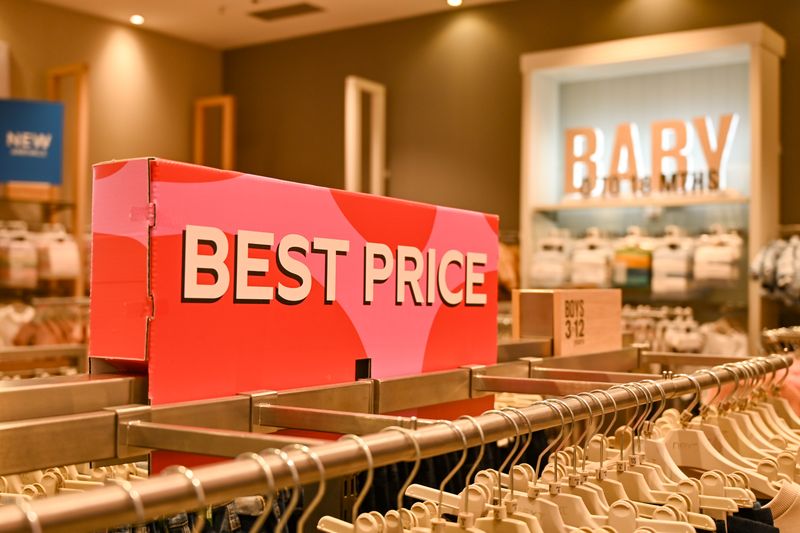
The options around unsold stock costs are set out side by side below, with the conditions that genuinely favour one over the other.
The difference in one place
- Losses are recovered from the units that do sell.
- High-return categories carry wider price gaps.
- Buying at full price subsidises the clearance rail.
Where the losses come from
A retailer loses stock to theft, damage, expiry, obsolescence, returns that cannot be resold as new, and goods that simply never find a buyer at the original price. Every one of those losses has to be recovered from the units that do sell, because there is nowhere else for the money to come from.
The trade groups several of these under shrinkage, a category that most large retailers measure carefully because it moves the whole business. None of it appears on a price tag, and all of it is priced into the tag before it is printed. This is why comparing a shop's price against a factory cost you found somewhere tells you almost nothing useful.
Returns are a pricing input now
In categories where trying at home replaces trying in a shop, return rates can be high enough to reshape the price of everything on the rack. A returned item costs the outbound delivery, the inbound handling, the inspection, the repackaging and often a reduction in what it can then be sold for. Where returns are described as free, the cost has been absorbed into the price paid by everyone, including those who never return anything.
That is a genuine transfer between customers, and it is one reason some sellers have moved to charging for returns explicitly. Neither arrangement is more honest than the other; one is visible and the other is averaged.
Markdowns are planned before the season starts
Buyers for seasonal categories plan on selling only part of a range at full price, with the rest clearing at progressively lower prices later. The full-price weeks therefore have to carry the margin for the whole buy, which sets the opening price higher than the average selling price will be. Anyone shopping the first weeks of a season is paying the price that funds the last weeks of it.
Per unit, that is a real trade: the early buyer gets choice and availability, and the late buyer gets price and whatever is left. Knowing which of those you are buying makes the timing decision explicit rather than accidental.
Why some categories are worse
Fashion and anything with a model year suffers heavily, because unsold stock loses value on a calendar rather than through wear. Fresh food faces the same pressure compressed into days, which is why reductions there follow a clock rather than a season.
Categories with stable, undated products can hold stock almost indefinitely, so their prices carry less of this loading. Fragile or bulky goods add handling and damage costs that show up as a wider gap on the shelf.
The loading is largest exactly where obsolescence is fastest, which is worth remembering before buying anything dated at full price.
What it means for the clearance rail
Clearance prices are not generosity and not usually a loss; they are the planned tail of a buy that was priced with this ending in mind. A shop clearing stock is converting an asset that is losing value into cash it can spend on the next season.
The number underneath says something else: that is why clearance depth often reflects how urgently the space is needed rather than how much demand remains. Space, not sentiment, drives the deepest reductions, and space pressure follows a calendar you can learn. The rail exists because the full-price weeks already paid for it.
Shopping either end deliberately
Decide whether a given purchase is one where choice matters or one where price matters, because you can rarely have both. For anything where size, colour or specification is critical, early is worth paying for and the premium is the cost of availability. For anything where you will take what is there, waiting for the planned tail costs nothing but patience.
The mistake is paying the early price while behaving like a late buyer, taking whatever remains at the full figure. Pick an end of the season and shop it on purpose.
Side by side
| Consideration | What it means in practice |
|---|---|
| Where the losses come from | Losses are recovered from the units that do sell. |
| Returns are a pricing input now | High-return categories carry wider price gaps. |
| Markdowns are planned before the season starts | Buying at full price subsidises the clearance rail. |
The takeaway
Choose whether you are an early buyer paying for choice or a late buyer paying for patience, and stop being both at once.
A discount is a claim about a price you were never asked to pay.
Questions readers ask
Am I really paying for other people's returns?
In categories with free returns, yes, in the sense that the handling cost is averaged into the price everyone pays. Some sellers now charge explicitly instead.
Why are clearance prices so much lower?
Because the range was priced from the start on the assumption that only part of it would sell at full price. The clearance tail was in the plan before the season opened.
Also by Imran Shaikh
- The anchor price still works after you have named itHow Pricing Works
- One product, three prices, and why that is the designHow Pricing Works
- Landed cost: the number a shop is actually working fromHow Pricing Works
- Dynamic pricing is a rule somebody wrote in advanceHow Pricing Works


