
Traps & Dark Patterns
Once it is in your house you are negotiating from a worse position
Home trials, test drives and try-before-you-buy schemes work because possession changes what people think something is worth.
There is a settled way of talking about possession before payment. It is worth asking how much of it survives contact with the detail.
The argument in brief
- People value what they already hold more than what they might acquire.
- Free home trials convert far better than showroom demonstrations.
- Setting a decision date at the start restores the original position.
What possession does to valuation
Once somebody holds an item, they tend to value it more highly than they did before it was in their hands. Researchers have found this repeatedly, and the effect appears within a very short period of taking possession. Giving something up starts to feel like a loss rather than declining to acquire it, and losses weigh more heavily than gains.
That asymmetry is why returning a satisfactory item feels harder than never having ordered it in the first place. None of this requires the item to be good; it only requires it to have become yours in the ordinary sense.
Why home trials exist
A demonstration in a shop is compared against everything else in the shop, which is the least favourable comparison available. The same item at home is compared against the gap it fills and against the effort of sending it back.
Adaptation also does work, because a household arranges itself around a new item within days without anybody deciding to. By the end of a trial period, returning the item requires undoing arrangements as well as packing a box. The scheme is a legitimate way to reduce a buyer's uncertainty, and it also reliably increases conversion.
The friction that decides the outcome
Whether a trial converts depends heavily on how easy returning is, and that is a design decision made in advance. Original packaging requirements, collection windows, restocking conditions and the size of the item all raise the cost of returning.
For large or installed items, that cost can be high enough that the decision is effectively made at delivery. Reading the return terms before accepting a trial is therefore more useful than reading them at the end of one. Where returning is genuinely simple, a trial is a good arrangement for the buyer as well as for the seller.
Where the same mechanism appears
Test drives, in-home demonstrations, sample subscriptions and extended borrowing periods all rely on exactly the same underlying effect. Software and services do it through data, since an account containing your work is much harder to abandon than an empty one.
Loyalty balances, saved settings and accumulated history all raise the cost of leaving without any charge being made. None of these are improper, and most of them deliver genuine value while they are being used.
The point is to notice when the difficulty of leaving, rather than the quality of the thing, is doing the persuading.
Restoring your original position
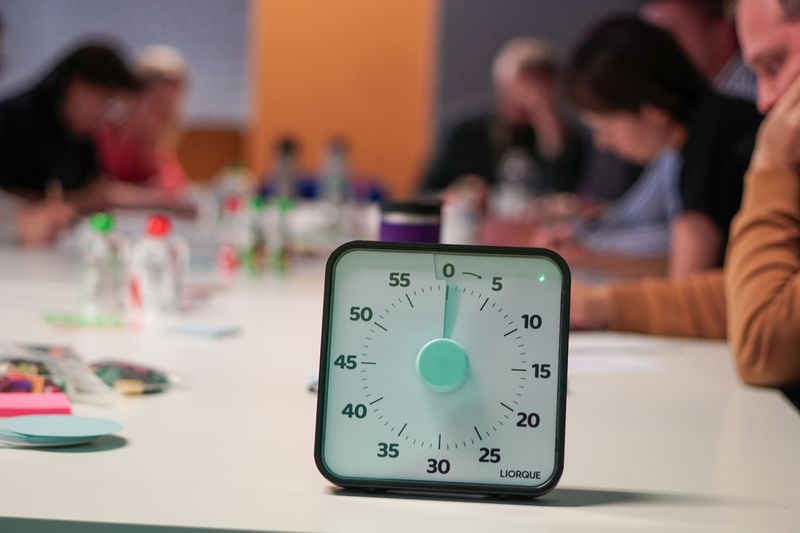
Decide the date on which you will make the decision at the moment the trial starts rather than when it ends. Write down what would make you keep the item, in concrete terms, before it arrives and before adaptation begins. Keep the packaging and the paperwork until the decision is made, because losing them changes the arithmetic.
If you would not buy it today at its price, having it in the house is not a reason to keep it. That question, asked on a date you chose, is the closest anybody gets to undoing the effect.
Return rights and what they actually give you
Many countries provide a cancellation period for goods bought at a distance, with exceptions and conditions that vary widely. Who pays return postage, and how the item must be kept during the period, differ between jurisdictions and between sellers. Trials arranged in person may fall outside distance selling rules entirely, depending on how the contract was formed.
The number underneath says something else: because the position differs so much, check what applies where you are rather than assuming any particular window. Whatever the rules, acting inside the period is far easier than negotiating outside it, so the date matters more than the detail.
The takeaway
Decide the date and the criteria before the item arrives, because after it arrives you are a different buyer.
The cheapest purchase is still the one you did not make.
Questions readers ask
Why is it so hard to return something I do not really want?
Because possession changes valuation and giving something up registers as a loss. Adaptation over a trial period adds practical friction on top of that.
How do I use a home trial without being caught by it?
Set the decision date and the criteria before the item arrives, keep the packaging, and ask whether you would buy it today at its price.
Also by Neelima Shetty
- The countdown timer that resets when you reloadTraps & Dark Patterns
- Was, from and up to: the small words that carry the claimTraps & Dark Patterns
- Free returns are priced in, not given awayReturns & Warranties
- The return window is a policy and the legal window may be anotherReturns & Warranties


